
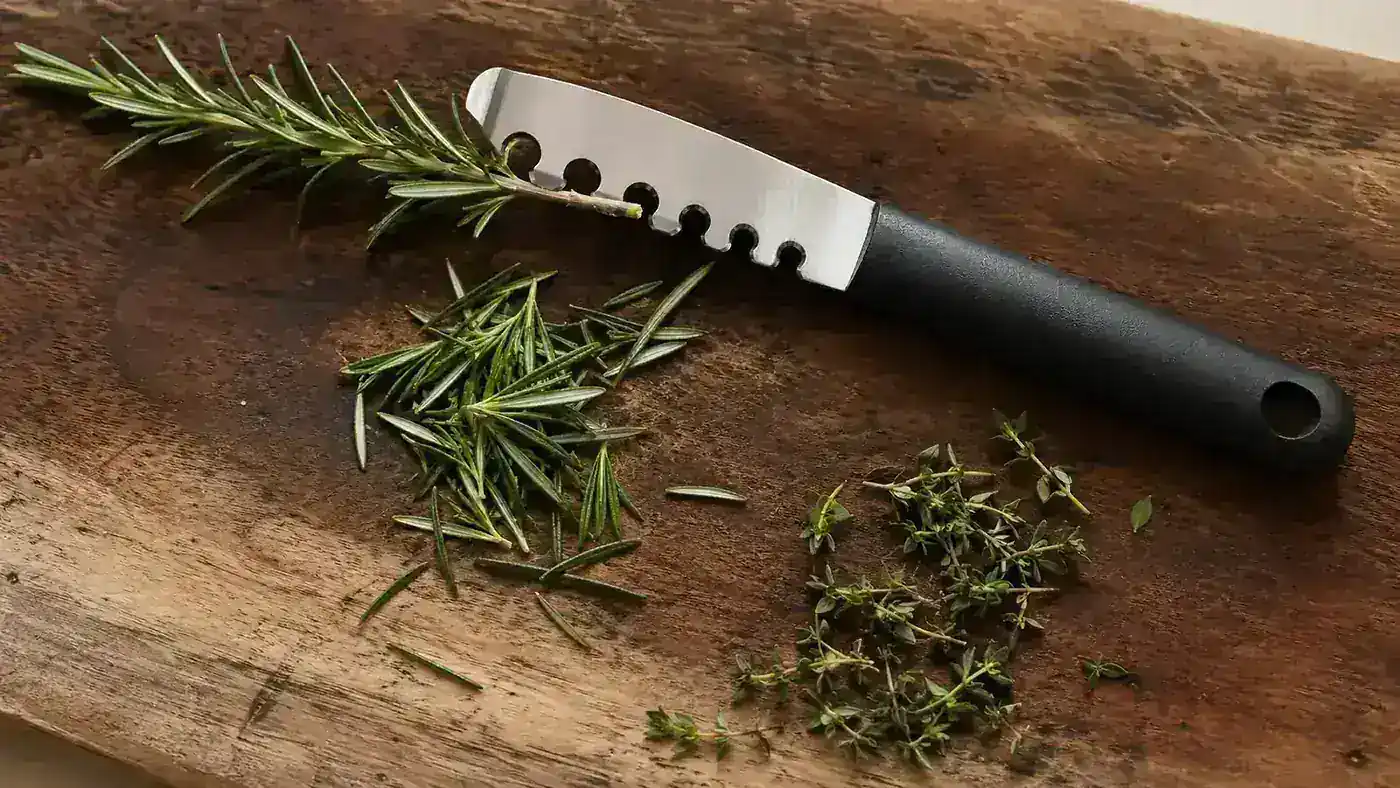
I bought the Luxiv herb stripper on a Tuesday night in April, half asleep after a twelve hour shift at the hospital, because my thumb was raw from stripping thyme by hand for the third night in a row. I garden in the small strip of dirt behind my back porch, mostly rosemary, thyme, kale, and collard greens my grandmother used to grow, and I cook real dinners on real nights even when I'm exhausted. Six dollars felt like a low bar to clear, so I added it to a grocery order without reading past the first two reviews. I wasn't expecting anything revolutionary. I was expecting a stainless disc with nine holes to save my thumbnail, and that's basically what showed up two days later in a small plastic sleeve with no case, no instructions, and no fanfare.
This is not the long term story. This is the honest one, the stuff that doesn't make it into a five star headline. I've used this thing three or four nights a week for a couple of months now, on everything from woody rosemary sprigs to floppy collard leaves, and some of what I found surprised me in ways I didn't see coming from the product photos. Some of it made my life genuinely easier. Some of it had me muttering at my sink with a toothpick in hand at ten at night. Both things are true, and I'd rather tell you both than pretend it's flawless.
The Quick Verdict
Genuinely useful for rosemary, thyme, and kale. Less impressive on collards and basil, and cleanup is more fiddly than the packaging lets on.
Amazon Check Today's Price →Still faster than a knife, even with the quirks
If your thumbnail is raw from stripping herbs by hand, this earns its spot on the counter even with the tradeoffs below.
Amazon Check Today's Price on Amazon →How I've Actually Used It
My routine is not glamorous. I get home around 7:30 on shift nights, and dinner needs to happen in twenty minutes or it doesn't happen at all. Most nights that means rosemary and thyme for whatever protein is in the pan, and on Sundays it means a big batch of collard greens or kale for the week, the way my grandmother taught me, low and slow with a ham hock or smoked turkey leg. Before this tool, stripping a full bunch of thyme by hand took me close to five minutes and left my fingertips smelling like a spice rack for a day. With the Luxiv stripper, the same bunch takes about ninety seconds.
I've run it through rosemary from my own bush at least twenty separate times, thyme almost as often, and kale and collards on six or seven Sunday batches since I started. I also tried it on basil once out of curiosity, which I'll get to, because it did not go the way I expected. It lives in my utensil drawer now, not a fancy holder, just tossed in with the whisks and the peeler, and I've reached for it often enough that I stopped thinking of it as a novelty gadget within the first two weeks.
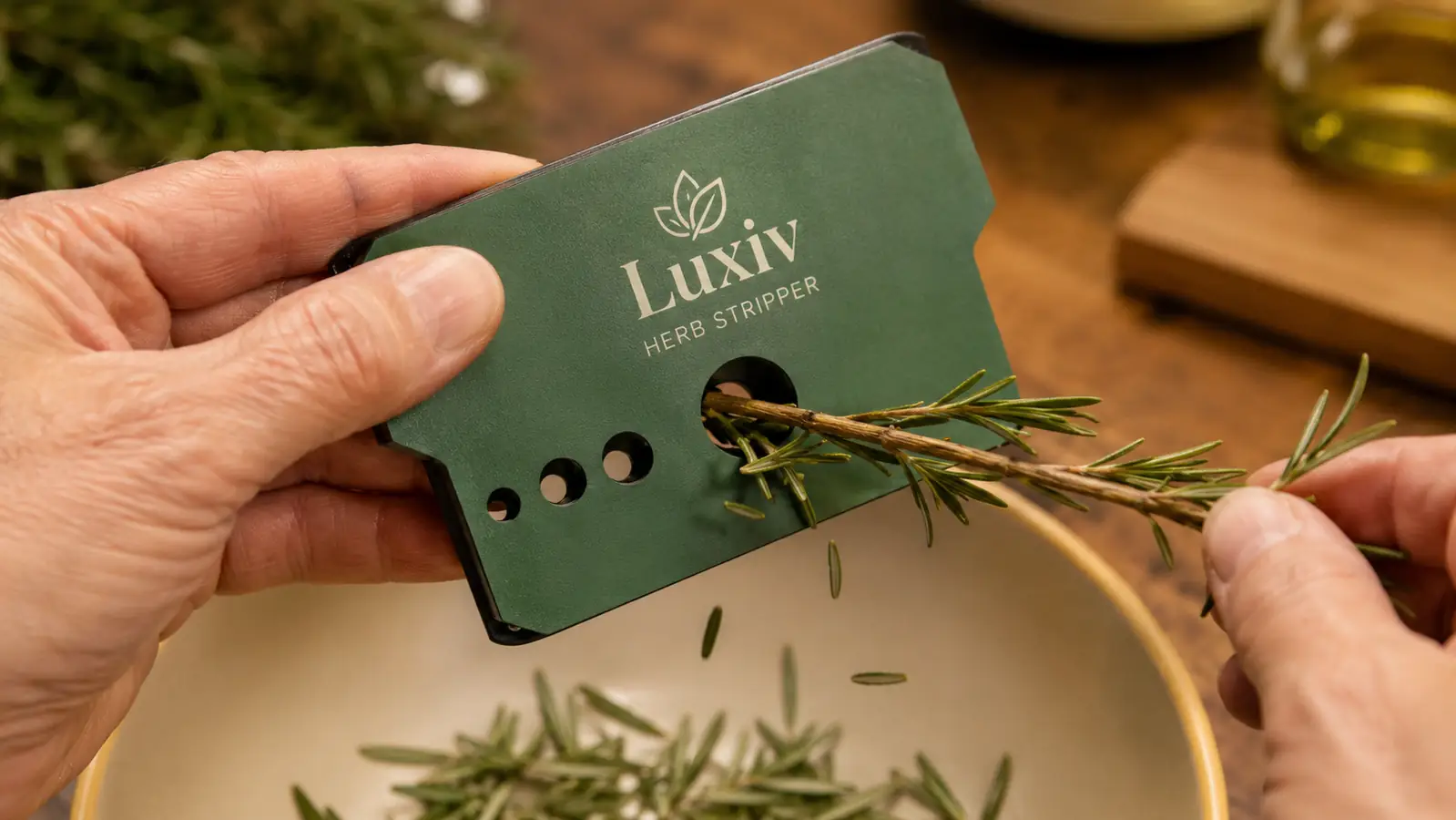
The tool itself is a flat stainless disc a little bigger than my palm, with nine holes cut into it in graduated sizes, smallest to largest arranged roughly around the ring. The idea is simple: you find the hole that roughly matches your stem thickness, push the stem through, and pull. The leaves catch on the edge and strip off, the bare stem comes out the other side. When it works, it feels a little bit like magic for something that costs less than a sandwich, and the first time I got a full rosemary sprig clean in one pull I actually said out loud to my empty kitchen, that's it?
The Holes Don't Fit Every Stem the Same Way
Here's the first thing nobody mentions in the glowing reviews. Nine holes sounds like a lot of flexibility, but herb stems are not standardized the way the marketing photos suggest. A young, tender rosemary sprig from the top of my bush fits neatly into one of the smaller holes and strips clean on the first pull. An older, woodier stem from lower on the same plant, picked the same afternoon, is noticeably thicker and needs the next size up, sometimes two sizes up. I've had stems that were just barely too fat for one hole and just barely too loose in the next one, which meant a second or third pull to get all the leaves off.
Thyme is more forgiving because the stems stay thin and fairly uniform, so I rarely fight with sizing there. Rosemary is the one that requires actual judgment. I've learned to eyeball the stem and guess the hole before I commit, but it took a few weeks of trial and error to get a feel for it. If you're expecting to grab any stem and shove it through the first hole you see, you'll strip out about seventy percent of the leaves and pick the rest off by hand anyway, which defeats some of the point.
Cleanup Is Not the Rinse and Done the Packaging Implies
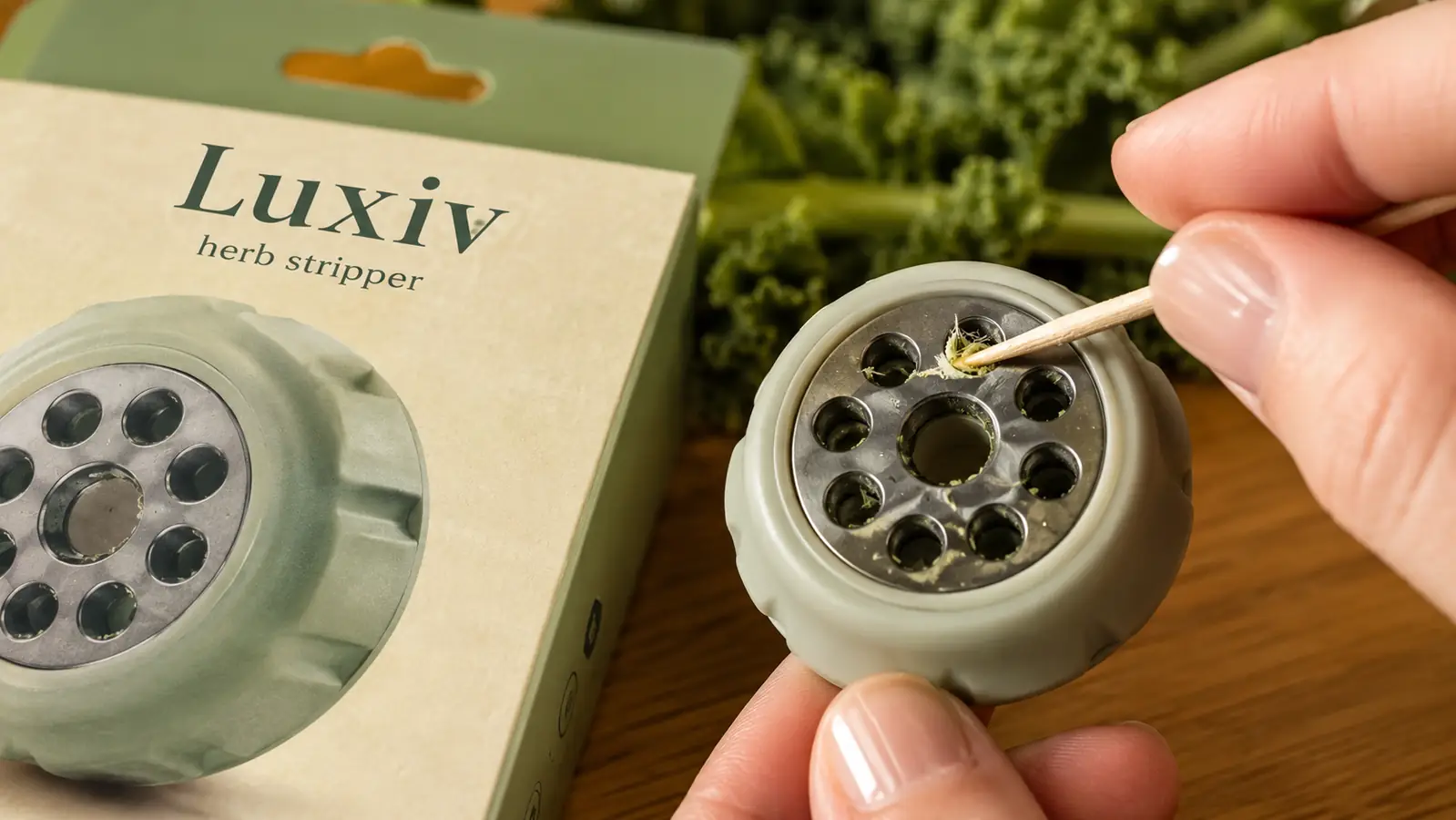
The listing photos make this look like something you wipe once and toss in a drawer. In practice, small bits of leaf and fiber get lodged in the tighter holes, especially after kale and collards, which have tougher, more fibrous stems than rosemary or thyme. A quick rinse under the faucet does not always dislodge everything. More than once I've had to grab a toothpick or the corner of a dish brush and physically pick debris out of a hole before it was actually clean, usually while I still had a pot on the stove and no real time to spare.
It is dishwasher safe, and I've run it through my own dishwasher probably fifteen times without any rust or discoloration on the stainless body, which is good news for anyone worried about it degrading fast. But the dishwasher doesn't always clear stuck fiber out of the smallest holes either, so I still do a manual check before I put it away. It's not a dealbreaker, it's just a five minute extra step that the product description conveniently leaves out.
The Stainless Body Shows Small Wear I Didn't Expect
This one surprised me. I assumed a solid piece of stainless steel would look brand new indefinitely, since that's how most of my stainless cookware behaves. After about six weeks of regular use, I noticed faint scuff marks near two of the larger holes, the ones I use most for collard ribs, where the edge has taken repeated friction from thicker stems. It doesn't affect function at all, the tool strips just as well as day one, but it no longer looks catalog fresh, and a couple of small water spots have settled into the finish that a quick towel dry doesn't fully lift.
None of this changed how the tool performs. I mention it because the product photos show a mirror finish that mine hasn't held onto, and if you're the type who likes gadgets to look pristine on a shelf, this will bother you a little. If you just want it to work, it still works exactly as well scuffed as it did new.
Where It Actually Earns Its Six Dollars
None of this is meant to talk you out of it, because the places where it works are genuinely worth the price. Collard greens for my grandmother's recipe used to mean sitting at the counter for ten or fifteen minutes folding each leaf in half and running a knife along the rib, over and over, for a full bunch. With the Luxiv stripper, I fold the leaf around the stem and pull it through the largest hole, and the rib slides right out clean. That single use has probably saved me two hours total over the Sundays I've owned it.
Kale for morning smoothies is similar. I used to tear the leaves off the tough center stem by hand, which left my fingers stained and took longer than I wanted to admit. Now it's a few seconds per leaf. Thyme sprigs for soup or roasted chicken are the fastest win of all, since the stems are thin enough to strip in one clean pull almost every time. If your cooking leans on any of these three, rosemary, kale, or collards, the tool pays for itself within the first week just in time saved.
How It Actually Compares to My Fingers and a Paring Knife
Before I owned this, my process was a paring knife for collard ribs and my thumbnail for everything else, which is how I ended up with a raw thumb in the first place. The knife method is precise but slow, and it's easy to nick a finger when you're rushing between a boiling pot and a ringing phone. My thumbnail method was fast for small amounts but genuinely painful after the third or fourth bunch in a week, especially with rosemary's woodier stems catching under the nail.
The stripper splits the difference. It's not quite as fast as my thumbnail on a single sprig, but it doesn't hurt, and it scales much better across a full bunch or a big Sunday batch. For a single sprig of rosemary for one dinner, I'll admit I sometimes still just pull it by hand because pulling out the tool feels like overkill. For anything beyond that, the tool wins clearly.

It Will Not Replace a Knife for Everything
I tried basil out of curiosity, mostly because I had a pot of it going on the porch and figured I'd save myself the trouble of hand picking leaves for a caprese salad. It did not go well. Basil stems are too soft and the leaves are too broad and delicate, so pulling them through a hole bruised the leaves and left dark marks within minutes. I went back to picking basil by hand that same night and haven't used the stripper on it since.
Swiss chard was a similar story, the leaves are just too wide and the ribs too irregular in thickness for a fixed set of holes to handle consistently. So this is not a universal herb and greens tool the way some of the marketing suggests. It's genuinely excellent on rosemary, thyme, kale, and collards. It's mediocre to bad on basil, chard, and anything with soft, broad leaves or delicate stems.
What I Liked
- Strips rosemary, thyme, kale, and collard ribs in seconds instead of minutes
- Solid stainless steel construction that survived fifteen-plus dishwasher cycles with no rust or discoloration
- Nine hole sizes give you real flexibility once you learn to judge stem thickness
- Costs less than a takeout coffee, low risk to try
- Scales well for big Sunday batches, not just single sprigs
Where It Falls Short
- Hole sizing takes trial and error, especially on rosemary with mixed stem thickness
- Small leaf fibers get stuck in tighter holes and don't always rinse out in the dishwasher
- Poor results on basil, chard, and other soft, broad-leaf greens
- No storage case, so it rolls around loose in a drawer with sharp-ish edges
- Finish picks up faint scuffs and water spots after weeks of regular use
It's not some flawless gadget. It's a six dollar disc that happens to be excellent at three or four specific jobs, and I'd rather know that going in than find out the hard way with a ruined basil harvest.
Who This Is For
If your kitchen regularly involves rosemary, thyme, kale, or collard greens, especially in any real quantity, this tool solves a genuine annoyance for not much money. I'm thinking of anyone who cooks from scratch on a tight schedule, whether that's a night shift nurse like me, a parent doing dinner between school pickups, or anyone who grows their own herbs and ends up with more stems than they know what to do with. If your hands cramp or your thumbnail gets raw from stripping herbs by hand, even occasionally, this is a cheap fix worth having in the drawer, and the learning curve on hole sizing takes maybe two or three uses before it becomes second nature.
Who Should Skip It
If your cooking leans heavily on basil, chard, spinach, or other soft and broad-leafed greens, save your six dollars, because you'll end up going back to a knife or your fingers most of the time anyway. Same goes for anyone who only cooks with fresh herbs a couple times a month. The time savings are real, but they add up over weeks of regular use, not the occasional Tuesday. If that's your pattern, hand stripping a small bunch here and there isn't worth buying a dedicated tool for, and you're better off keeping the drawer space for something you'll reach for more often.
Worth the six dollars if your herbs match its strengths
Rosemary, thyme, kale, and collards are where this tool shines. If that's your kitchen, it's a low-risk buy.
Amazon See Current Price and Availability →