
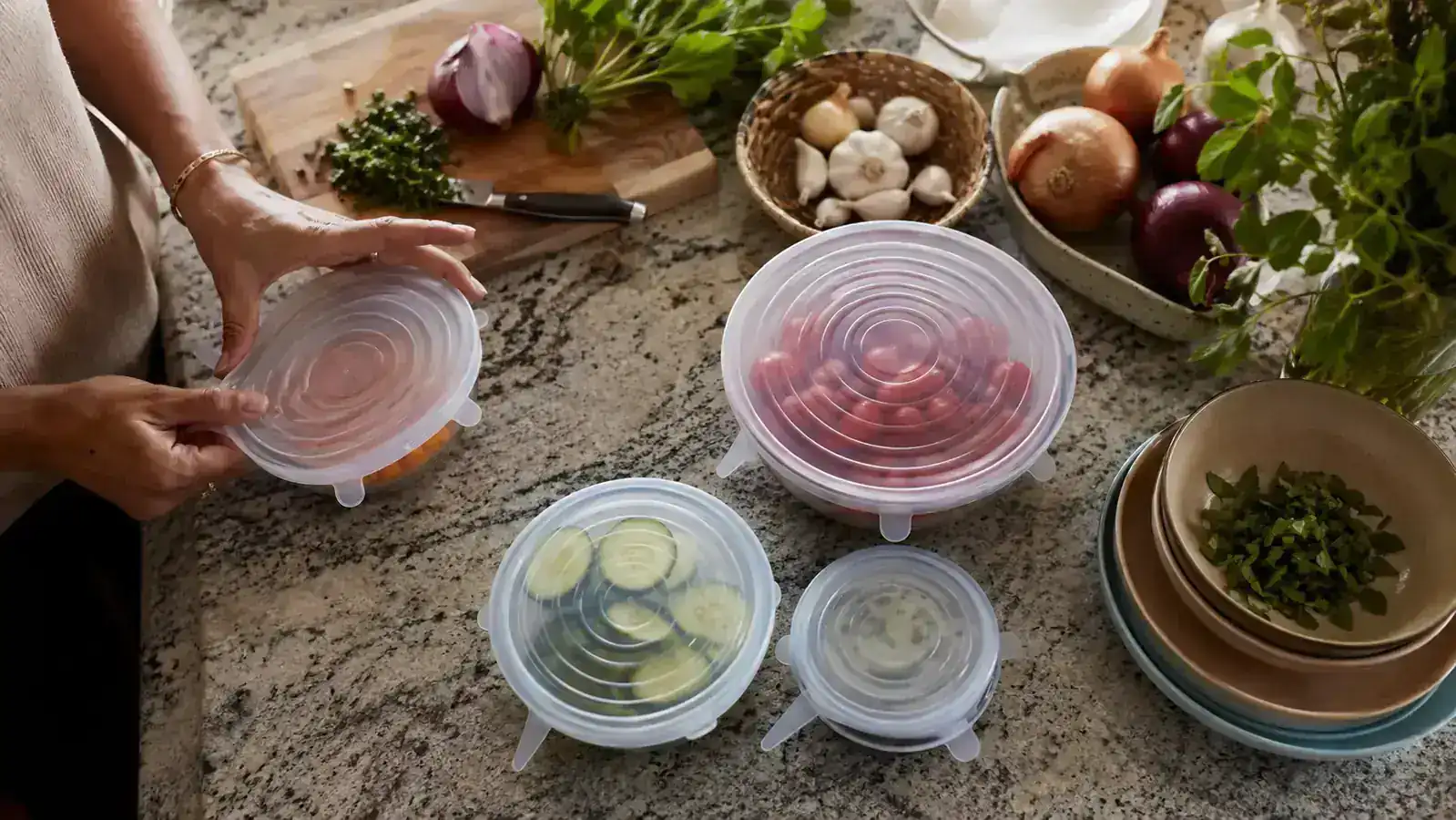
I bought the Longzon stretch lids after one too many nights fighting a roll of plastic wrap that had torn sideways and stuck to itself in a ball on my counter. Fourteen silicone lids for under sixteen dollars sounded almost too good, and honestly, it mostly is. But I've had these in daily rotation since March, covering everything from garden cucumbers to a pot of soup that outlived three shift changes in my fridge, and there are things about them the five-star reviews just don't mention.
This isn't a six-month log of every use. It's the stuff that actually surprised me, good and bad, after using the same set of Longzon lids in a real kitchen with real garden produce and real leftovers that don't always fit into a tidy round bowl. I work twelve-hour nursing shifts, and whatever I use has to survive being grabbed half-awake at six in the morning, not just perform well in a calm test kitchen.
I did the math on plastic wrap before I bought these, since I go through a roll every few weeks between garden prep and covering bowls in the fridge. Even at a couple dollars a roll, that adds up over a year, and the waste of it bothered me more than the cost. That's really what pushed me to try a reusable option instead of what the lids claimed to do out of the box.
The Quick Verdict
Genuinely useful for round bowls, jars, and cut produce, but the sizing, staining, and smell issues are real and worth knowing before you buy.
Amazon Check Today's Price →Still faster than digging through the foil drawer for the right size lid.
See current pricing and the full 14-piece size breakdown on Amazon before you decide.
Amazon Check Today's Price on Amazon →How I've Actually Used These
I run a small vegetable garden behind the house, mostly tomatoes, cucumbers, and bell peppers, and between that and working twelve-hour shifts, I end up with a lot of half-used produce and a lot of leftovers that need a lid, fast. The Longzon set lives in a drawer next to my stove, and I reach for one almost every day, not because I love kitchen gadgets but because it's genuinely quicker than finding a matching lid for a mismatched bowl.
The medium sizes get the most use in my house. They stretch over a cut cucumber half, a bowl of chopped bell peppers, or a coffee mug I don't feel like washing right away. The small ones work well on lemon halves and the little ramekins I use for sauces. Where things get more complicated is the two largest lids in the set, and I'll get into that.
I also tried them in the microwave, which the packaging says is fine as long as you vent a corner, and that held up. No melting, no weird smell, no warping. Reheating a bowl of soup with the lid still on and one edge peeled back worked exactly like it's supposed to, and it saved me from dirtying a second plate just to cover the bowl.
One thing I didn't expect to like as much as I do is using the smallest lids over cut citrus. I go through a lot of lemons and limes for iced tea in the summer, and before these, a lemon half sitting cut-side down on a plate in the fridge would dry out or roll around and leak juice everywhere. The small lid just stretches right over the cut half and it stays juicy for days longer than it used to.
My grandkids have also gotten into the habit of grabbing a lid themselves when they cover their own snack bowls after school, which tells me something about how simple these actually are to use. There's no clip, no matching a lid number to a container size, just stretch and go. That ease of use is probably the single biggest reason this set gets picked over rigid containers in my kitchen most days.
The Sizing Problem Nobody Warns You About
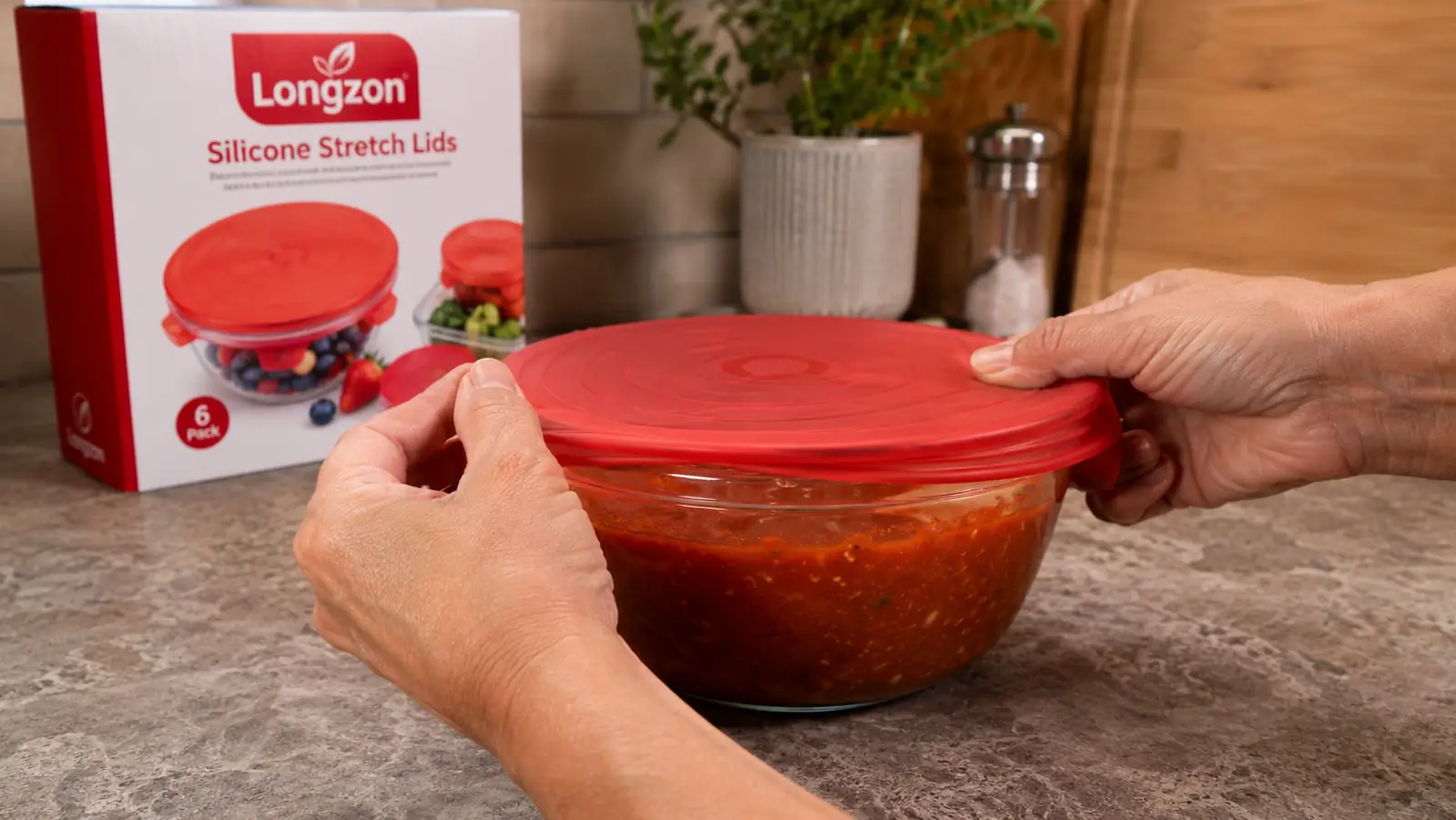
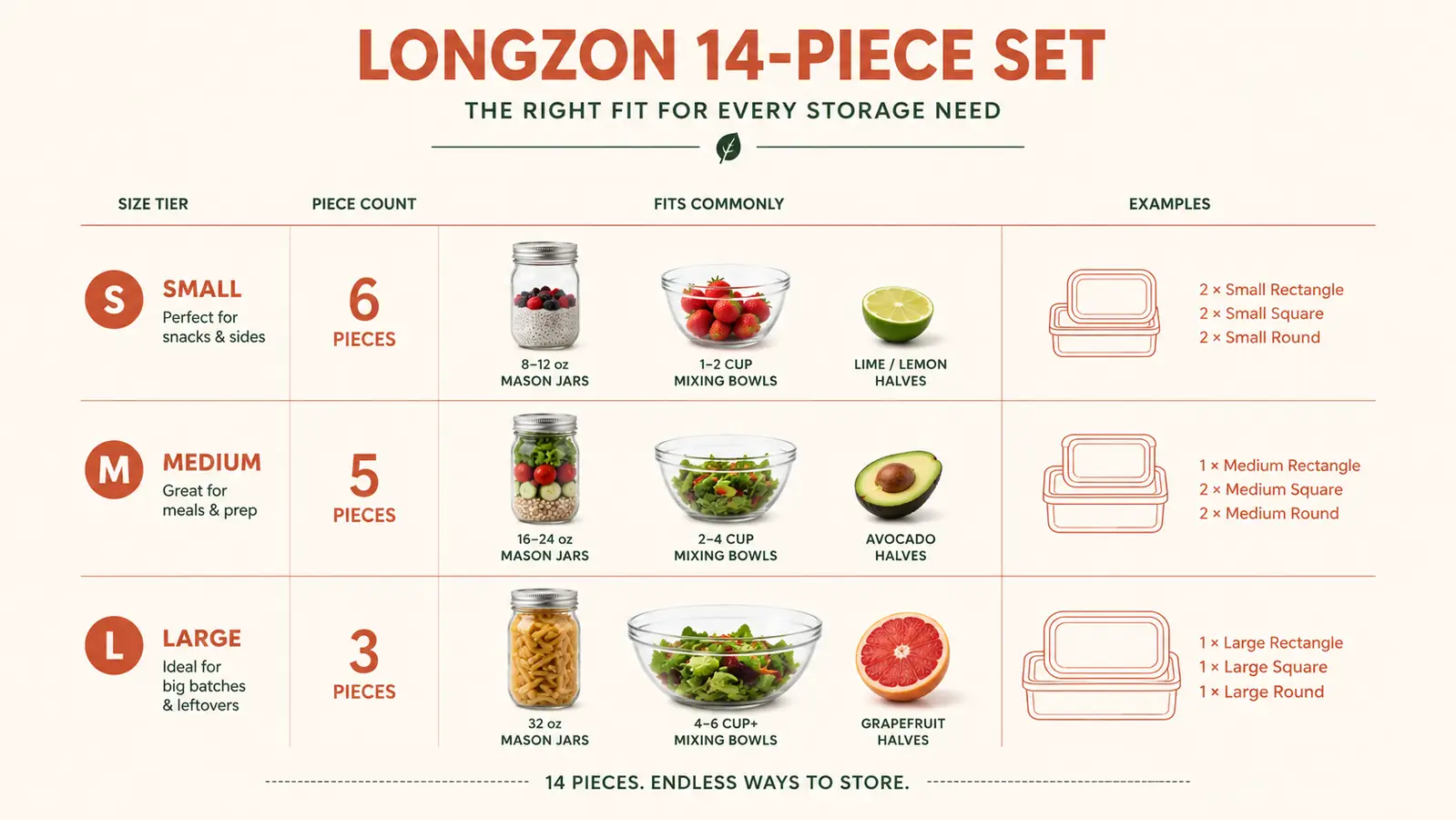
Here's the thing the box doesn't spell out clearly enough. Out of fourteen lids, only two are the large size that claims to stretch up to 9.8 inches. Everything else is small or medium. If you're picturing covering your big mixing bowl, your 9x13 casserole dish, or a large stockpot on a regular basis, you're going to run out of large lids fast, and then you're back to foil or a dinner plate balanced on top.
I learned this the hard way when I tried to cover a big batch of garden tomato sauce I'd made for canning prep. Both large lids were already in the dishwasher from covering leftovers the night before, and I ended up using a sheet pan as a makeshift lid instead. It's a small thing, but if your kitchen leans toward bigger batch cooking, this set skews smaller than the marketing photos suggest.
I actually went back and counted the set out on my counter to double check I wasn't misremembering. Six small, six medium, two large. That breakdown makes sense if your storage is mostly single servings and cut produce, which is a lot of what I do, but it's worth knowing before you assume you're getting a full range of large lids to replace your biggest Tupperware.
The upside is that the small and medium sizes are genuinely versatile. They handle produce shapes that a rigid container never could, like a cut onion half or an oddly shaped bowl of leftover rice. Just don't buy this set thinking you're getting fourteen lids that can each replace a big Tupperware lid, because you're really getting two of those and twelve smaller helpers.
What Happens After Four Months of Tomato Sauce
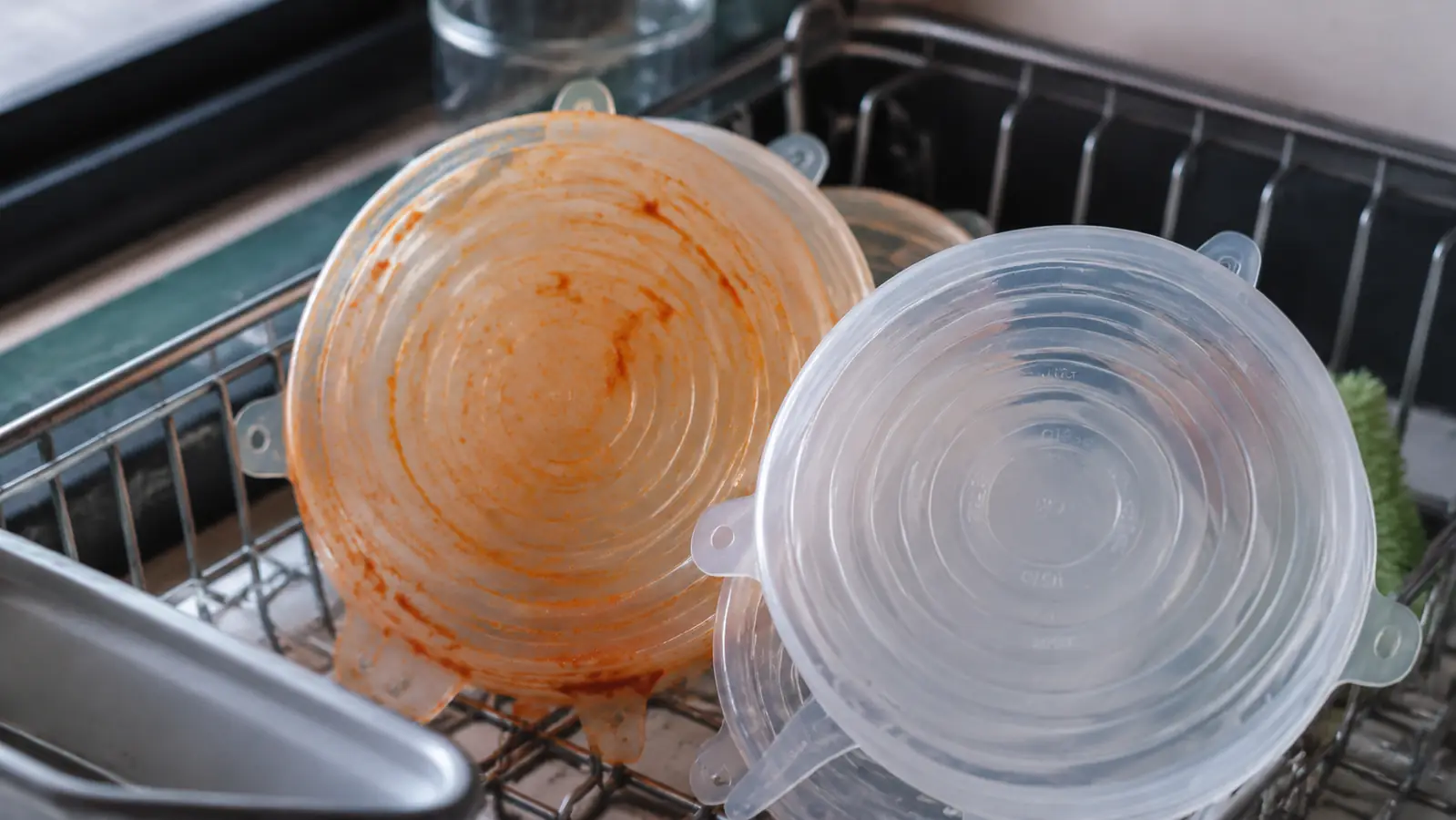
Nobody mentions the staining until you've lived with it. Anything tomato-based, and with a garden full of tomatoes I make a lot of sauce, will leave a faint orange tint on the silicone that doesn't fully wash out. It's not a big deal functionally. The lid still seals fine. But four months in, three of my medium lids have a permanent orange cast around the rim that a plain white or clear lid would never show.
Turmeric does the same thing, even worse actually. I made a batch of golden milk for my mother-in-law and the lid I used on the storage jar still has a faint yellow ring on it, and I've run it through the dishwasher four separate times since.
I tried a few things to get the stains out before I gave up. A baking soda paste left overnight lightened them slightly. Straight sunlight on the counter for a few hours faded one of the worst ones a little more. Neither brought a lid back to looking new, and at this point I've just accepted that my orange-tinted lids are the ones that get tomato sauce duty going forward, since the stain is already there anyway.
None of this affects how the lids work. They still stretch, still seal, still hold up in the dishwasher. It's purely cosmetic. But if you're the type who likes things looking new, know that tomato sauce and turmeric will leave their mark, and no amount of scrubbing brings the color all the way back.
Where the Seal Actually Fails
The seal is genuinely good on round bowls, jars, and most cut produce. Where it struggles is anything with a lip, a handle, or an irregular rim. I tried using one on a pitcher with a spout and it just would not hold a full seal, air kept sneaking in around the spout cutout no matter how I stretched it. Same story with a rectangular casserole dish, the corners just don't get the tension a round rim gets, so you end up with loose gaps at each corner.
I also had one lid pop halfway off overnight in the fridge after I covered a very full bowl of leftover chili. The lid was stretched to its limit, and something about the fridge temperature change loosened the tension enough that I found it half off the next morning with a thin film over the exposed part. It wasn't a food safety disaster since it was still mostly sealed, but it taught me not to use these on bowls filled all the way to the rim.
I also noticed the seal holds better on glass and ceramic bowls than it does on some plastic mixing bowls I have, especially the older ones with a slightly warped or chipped rim. The silicone needs a clean, even edge to grip against, so if your bowls have seen some wear over the years, don't be surprised if the seal is less reliable than it is on a brand new dish.
For anything liquid like broth or soup that's filled close to the top, I still trust a container with a snap lid more. The stretch lids are better suited to bowls with some headroom, cut produce, and jars where the opening is a consistent circle.
The Freezer Test I Wasn't Expecting to Run
I froze a bowl of garden bell peppers under one of the medium lids without really thinking about it, just grabbed what was closest at the time. Three weeks later I pulled it out and the lid had gone noticeably stiffer from the cold, enough that I had to warm it slightly under my hands before it would stretch back off the bowl without cracking at the edge. It didn't crack, but it came close, and I wouldn't want to bend a frozen lid too aggressively.
Once it warmed up for a couple of minutes on the counter it went right back to normal, stretchy and pliable like nothing happened. So freezer use works, but it's not quite grab-and-go the way it is straight out of the fridge. If you're using these for freezer storage regularly, budget an extra minute for the lid to soften before you try to remove it.
The Smell Thing
This one surprised me the most. Silicone holds onto strong smells more than I expected. I used one lid repeatedly on a container of garlic and herb marinated chicken, and even after several dishwasher cycles, that lid still carries a faint garlic smell when I pull it out of the drawer. I've started keeping one lid dedicated to strong-smelling foods and rotating the rest for milder things, which works fine, but it's an extra mental step I didn't think I'd need.
A quick baking soda soak helps knock most of the smell down, but it doesn't erase it completely on the lids that have seen the most garlic and onion duty. If you're sensitive to that kind of thing, or you cook with a lot of pungent aromatics like I do from the garden, it's worth knowing going in.
I've also noticed the smell issue is worse on lids that sat in a sealed drawer overnight versus ones I left out to air dry completely before putting away. Giving them a full dry on the rack instead of stacking them straight from the dishwasher seems to cut down on how much odor gets trapped against the silicone over time.
What I Liked
- Stretches to fit odd shapes plastic wrap and rigid lids can't handle, like cut onions and lemon halves
- Genuinely cuts down on plastic wrap and foil use week to week
- Dishwasher safe and holds up fine after four months of regular use
- Microwave safe with a corner vented for reheating leftovers
- Stackable and thin enough that all fourteen fit in one drawer section
- Keeps cut citrus and produce fresh noticeably longer than a plate or loose wrap
- Simple enough that even my grandkids use them correctly on the first try
Where It Falls Short
- Only two of the fourteen lids are the large 9.8 inch size, the rest are small and medium
- Tomato sauce and turmeric leave a permanent stain tint on the silicone
- Poor seal on rectangular dishes, pitchers with spouts, or anything with an irregular rim
- Can pop loose overnight on bowls filled all the way to the top
- Absorbs strong smells like garlic and onion that don't fully wash out
- Goes stiff in the freezer and needs a minute to soften before removal
- Seal is less reliable on older bowls with worn or chipped rims
They're not a replacement for every lid in my kitchen. They're a replacement for the plastic wrap I used to reach for out of habit.
Who This Is For
If you're someone who cooks from a garden or buys produce in bulk and constantly has odd half-used vegetables sitting around, these earn their keep fast. Same if you're just tired of fighting plastic wrap and want something reusable for round bowls, jars, and everyday leftovers. For the price, replacing even a few rolls of plastic wrap a year makes this an easy call, and the size range covers most single-portion and cut-produce needs without much thought. Busy households where more than one person is grabbing a lid also benefit, since there's no learning curve involved.
Who Should Skip It
If most of your storage needs are big batch cooking in rectangular dishes, or you regularly store liquids filled to the brim, you'll be disappointed by how often you're reaching for the two large lids or giving up and grabbing foil anyway. And if you're particular about kitchen tools staining or holding onto smells over time, this set will test your patience by month three or four, especially if tomato sauce or garlic shows up in your kitchen as often as it does in mine. Anyone who cans or preserves in large volume will likely need a second, larger-focused set alongside this one.
Worth the drawer space if your kitchen runs on garden produce and leftovers, not big rectangular casseroles.
Check current availability and pricing for the 14-piece Longzon set on Amazon.
Amazon Check Today's Price on Amazon →