
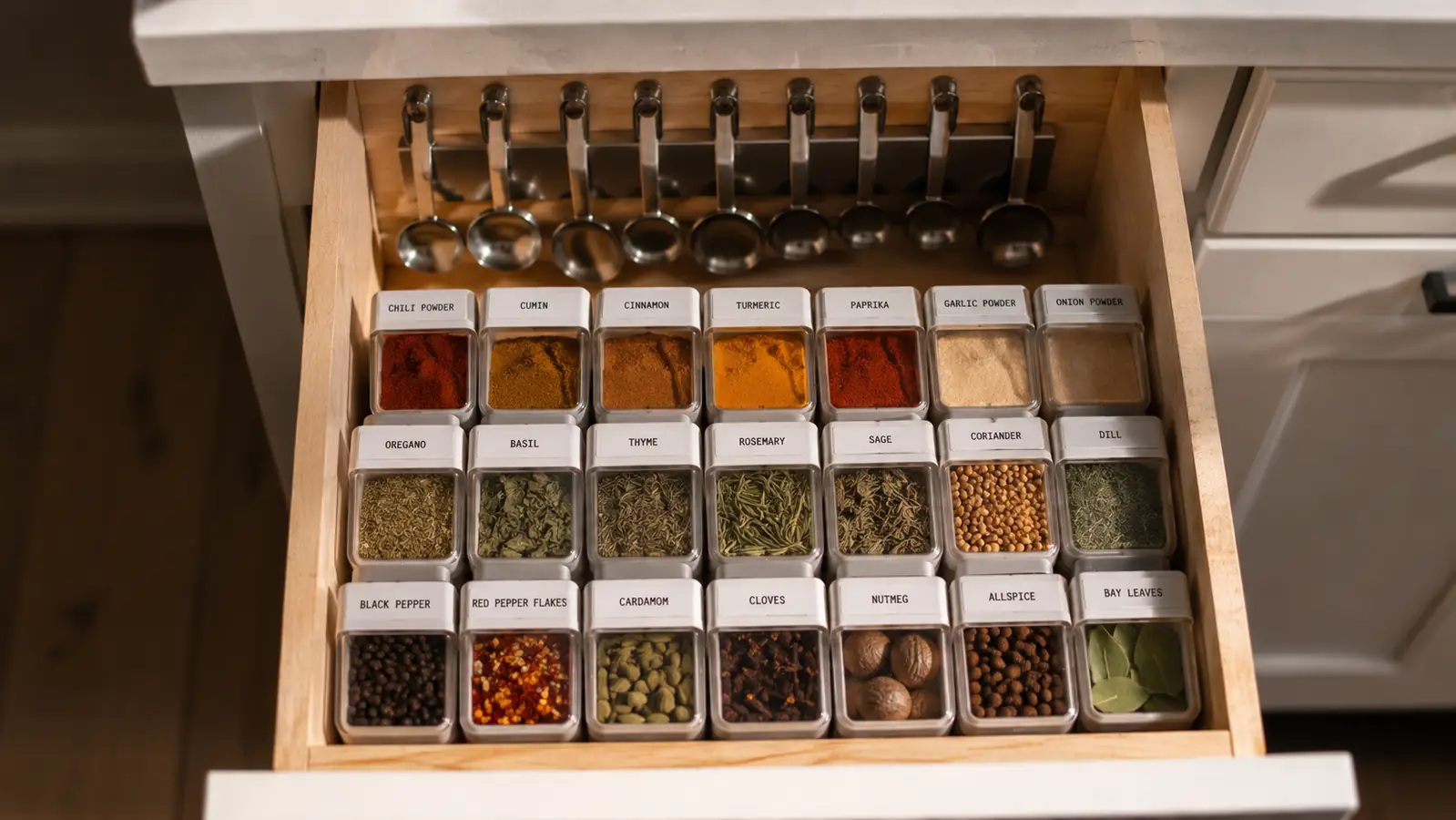
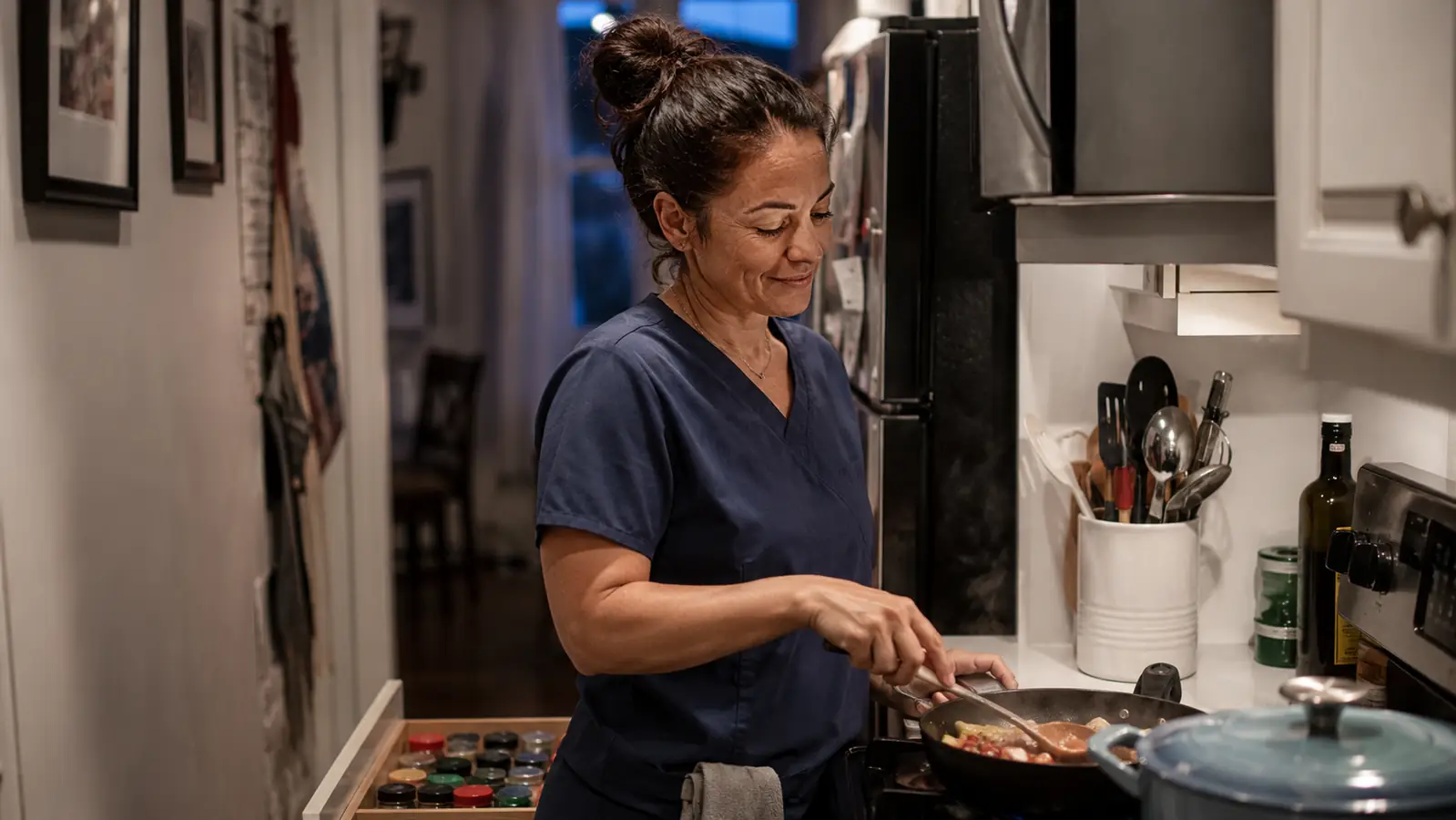
My spice drawer used to be the drawer nobody wanted to open. It sat under the counter next to the stove in my galley kitchen, and every time I pulled it out looking for smoked paprika, three loose measuring spoons would slide to the back and jam the track. I work 12-hour shifts in the ER, so by the time I get home and start dinner, I do not have patience for a drawer that fights me. The fix that actually stuck came down to two things: a real system for the spices, and a set of magnetic measuring spoons from Spring Chef that click together and stay put instead of scattering every time I open the drawer.
This is the exact process I used on my own kitchen last spring, and it took about 40 minutes start to finish, most of it spent wiping down a drawer that had turmeric dust in every corner. I am not a professional organizer. I am a nurse who cooks real dinners on a real schedule, and this system is built for someone in that same boat, not someone with a labeled pantry and a Pinterest board.
I had tried the usual advice before this. Alphabetized jars, a lazy susan I never turned, a set of tiered risers that looked great for exactly nine days. Every version fell apart for the same reason: the measuring spoons. A regular set on a metal ring does not have a home. It gets set down wherever there is space, it slides when the drawer opens, and within a week it is tangled in whatever else lives in that drawer. Fixing the spoons first is what made the rest of the system hold.
Stop Fishing Loose Spoons Out of the Back of the Drawer
If your measuring spoons are the reason your spice drawer never stays organized, the fix isn't a bigger drawer. It's a set that locks together and sticks to metal so it can't slide around. Spring Chef's magnetic set is the one I use in my own kitchen and the one I recommend to anyone starting this project.
Amazon Check Today's Price on Amazon →Step 1: Empty the Drawer and Be Honest About What You Actually Use
Pull everything out of the drawer and set it on the counter in one big group. Do not sort as you go, just clear it out completely so you can see the actual footprint you are working with. When I did this, I counted 34 spice jars, four sets of measuring spoons (only one of which was a full set), two rubber spatulas that had migrated in from a different drawer, and a takeout menu from 2021.
Now split everything into three piles: spices you reach for at least weekly (garlic powder, cumin, cinnamon, kosher salt), spices you use maybe once a month (smoked paprika, coriander, dried thyme), and spices you have not touched in over a year. That last pile is usually bigger than people expect. Mine had six jars in it, including a cardamom I bought for one recipe in 2023 and never opened again. Anything in that third pile either gets moved to a high shelf out of the way or tossed if it is more than two years old, since ground spices lose potency fast.
While the drawer is empty, wipe down the inside with warm water and a little dish soap. Spice residue builds up in the corners and it is much easier to clean an empty drawer than one you are working around. Let it air dry for a few minutes before you put anything back, especially if you are about to stick an adhesive magnetic strip to the inside wall. Adhesive does not bond well to a damp surface, and I learned that the hard way when my first strip peeled off after two days.
This is also the point to gather every loose measuring spoon and spatula hiding in other drawers. Mine had strays in the junk drawer, a drawer by the sink, and one lonely half-teaspoon that had somehow ended up in the silverware tray. Bringing everything into one pile before you sort means you are not rebuilding this system a second time in a month because you found three more spoons behind the toaster.
Step 2: Measure Your Drawer and Decide on a Layout
Grab a tape measure and get the actual inside dimensions of the drawer, width, depth, and height. My drawer measured 21 inches wide by 15 inches deep, which is a fairly standard size for a kitchen under-counter drawer. This number matters because it tells you whether you need a tiered spice rack insert, a set of small bins, or just a simple divider strip.
For a shallow drawer like mine, I skipped the tiered rack (it ate too much vertical space and made the jars hard to read from above) and went with three shallow bins from the dollar store, plus a stick-on magnetic strip along the back wall of the drawer for the measuring spoons. If your drawer is deeper, a two-tier insert works better because you can see two rows of labels at once instead of stacking jars on top of each other.
Sketch it out before you buy anything. I drew a rough rectangle on a sticky note and marked where the bins would sit, where the magnetic strip would go, and how much clearance I needed for the drawer to still close without jars tipping over when it slides shut. This took maybe five minutes and saved me from buying a bin set that was two inches too tall for the drawer to close over.
If you share a kitchen with someone else who cooks, this is a good moment to walk them through the plan before it becomes permanent. My husband and I have different instincts about where things should live, and a thirty-second conversation over the sticky note sketch saved us from redoing the whole layout a week later when he kept putting the spoons back in the wrong spot out of habit.
Step 3: Give the Magnetic Measuring Spoons a Home They Can't Wander From
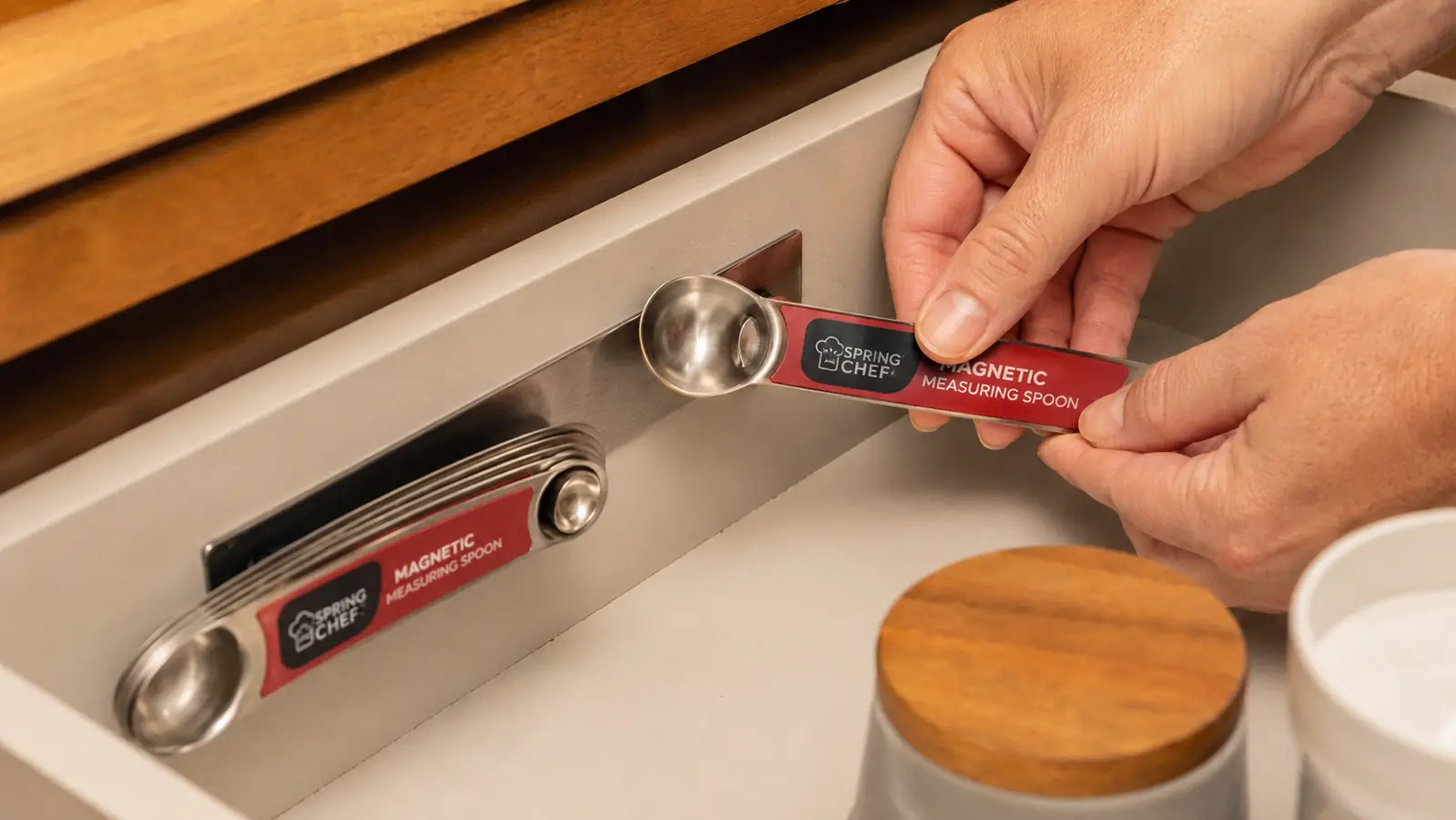
This is the step that actually solved my original problem. Regular measuring spoons are loose metal pieces on a single ring, and in a drawer, that ring slides, tangles with spice jars, and ends up wedged in the back corner every single time. I switched to the Spring Chef magnetic measuring spoons because each spoon has a magnet strong enough to hold it flush against its matching spoon, so the whole set nests together as one solid stack instead of a loose ring of parts.
I stuck a thin adhesive magnetic strip to the inside back wall of the drawer, right where my hand naturally lands when I reach in. The full stainless steel set, tablespoon down to 1/8 teaspoon, clicks onto that strip and stays vertical against the wall instead of rolling around loose with everything else. When the drawer opens, the spoons do not move. That one change is what stopped my spice drawer from turning back into chaos within a week of cleaning it, which is what happened every previous time I tried to organize it.
If you do not want to add an adhesive strip, the set is also magnetic enough to stick straight to the metal drawer slide itself on some cabinet hardware. I tested both in my kitchen. The stick-on strip gave a cleaner, more consistent hold, especially once the drawer started getting bumped by kids reaching for snacks nearby.
A detail that made a real difference for me, since I am often cooking one-handed while holding a spatula or scrolling a recipe on my phone: the spoons stack in order by size when they are magnetized together, so I can grab the whole stack, peel off the one I need, and click the rest right back without looking. On a night shift week, that small bit of muscle memory is worth more than any label system in the drawer.
Step 4: Group Spices by How Often You Reach for Them, Not the Alphabet
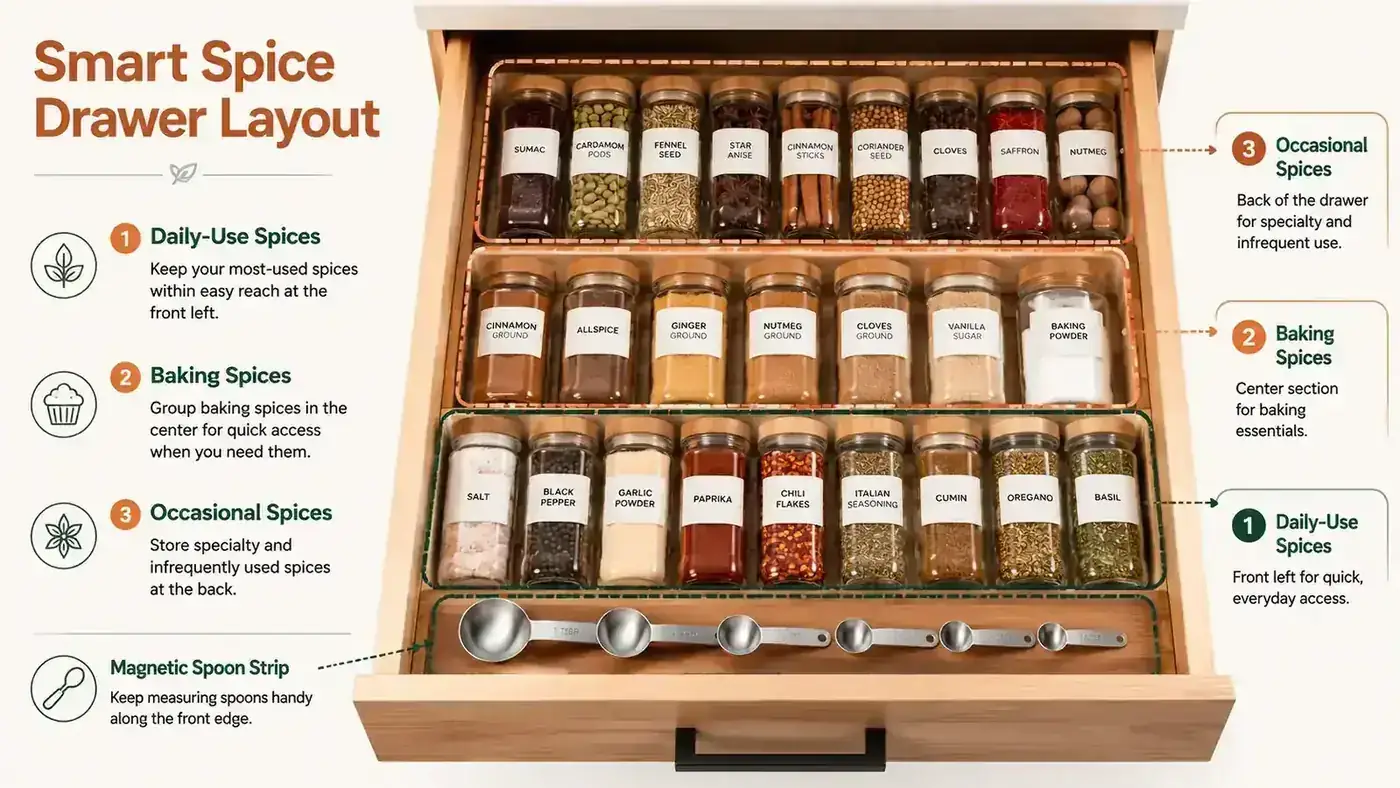
Alphabetizing looks nice in photos, but it is not how most people actually cook. I organize by frequency instead. The front-left bin holds my daily five, salt, pepper, garlic powder, onion powder, and cumin. The middle bin holds baking spices, cinnamon, nutmeg, vanilla extract, since I bake on weekends and want those grouped together when I pull out the mixing bowls. The back bin holds the occasional-use spices I reach for maybe twice a month.
Turn every jar so the label faces up or forward, whichever way you look down into the drawer when you open it. This sounds minor, but it is the difference between finding smoked paprika in two seconds versus tipping out four jars to read the sides. If your jars do not have a clear top label, a strip of painter's tape and a marker works fine. You do not need a label maker for this to hold up long term.
Keep the measuring spoons at the front of the drawer, closest to where your hand enters first. You reach for measuring spoons constantly when you are cooking, more than any single spice most nights, so they should never be buried behind the jars.
Give yourself permission to change the groupings after a week or two of actually cooking with the new layout. My first version put dried herbs in the front bin because I assumed I would use them often. In practice, I cook mostly with fresh herbs from the garden in summer, so I moved the dried herbs to the back bin and swapped in chili powder and taco seasoning instead. The system should follow how you actually cook, not how you think you should cook.
Step 5: Build a 90-Second Reset Into Your Week
A drawer stays organized because of a habit, not because of the bins. Every Sunday, while I am prepping for the week, I do a 90-second reset: I nudge any jar that has drifted back into its bin, I make sure the measuring spoons are still stacked flush on the magnetic strip, and I toss anything that spilled or got sticky during the week.
This is the step people skip, and it is the reason most spice drawer projects fall apart within a month. The system does not need to be perfect every single day. It needs one short check-in a week so small drifts do not turn into the same tangled mess you started with. On the weeks I skip this, I notice by Thursday that things have started sliding again, mostly because the spoons get set back in loose instead of clicked onto the strip.
I keep this reset attached to something I already do, which is meal prep on Sunday afternoons. Tying a new habit to an existing one is the only reason mine has lasted past the first month. If you do not have a regular Sunday routine, attach the reset to trash day or grocery day instead, whichever already happens on a fixed schedule in your week.
What Else Helps
A few small additions make this system hold up even better over time. A shallow drawer liner with a slight grip keeps jars from sliding when the drawer opens fast, which matters if you have kids in the kitchen. Refilling spices into matching small jars instead of keeping every original packaging cuts down on wasted space, though this is optional and I only did it for my daily five. And keeping a spare set of magnetic measuring spoons in a second location, like a baking-specific drawer if you have one, means you are not carrying spoons back and forth between two workstations.
I also keep a small dish towel folded in the front corner of the drawer for wiping a spoon between measuring dry and wet ingredients mid-recipe. It is a tiny addition, but it means I am not reaching for a paper towel and tracking flour across the counter every time I switch from measuring baking powder to vanilla extract.
The bins were never the real fix. The real fix was giving the measuring spoons a spot they physically could not slide out of.
Give Your Drawer the One Upgrade That Actually Sticks
Bins and dividers help, but loose measuring spoons are what unravel a spice drawer week after week. Spring Chef's magnetic set nests together and holds to a metal strip, so it stays organized on the weeks you do not have time for a full reset.
Amazon Check Today's Price on Amazon →