
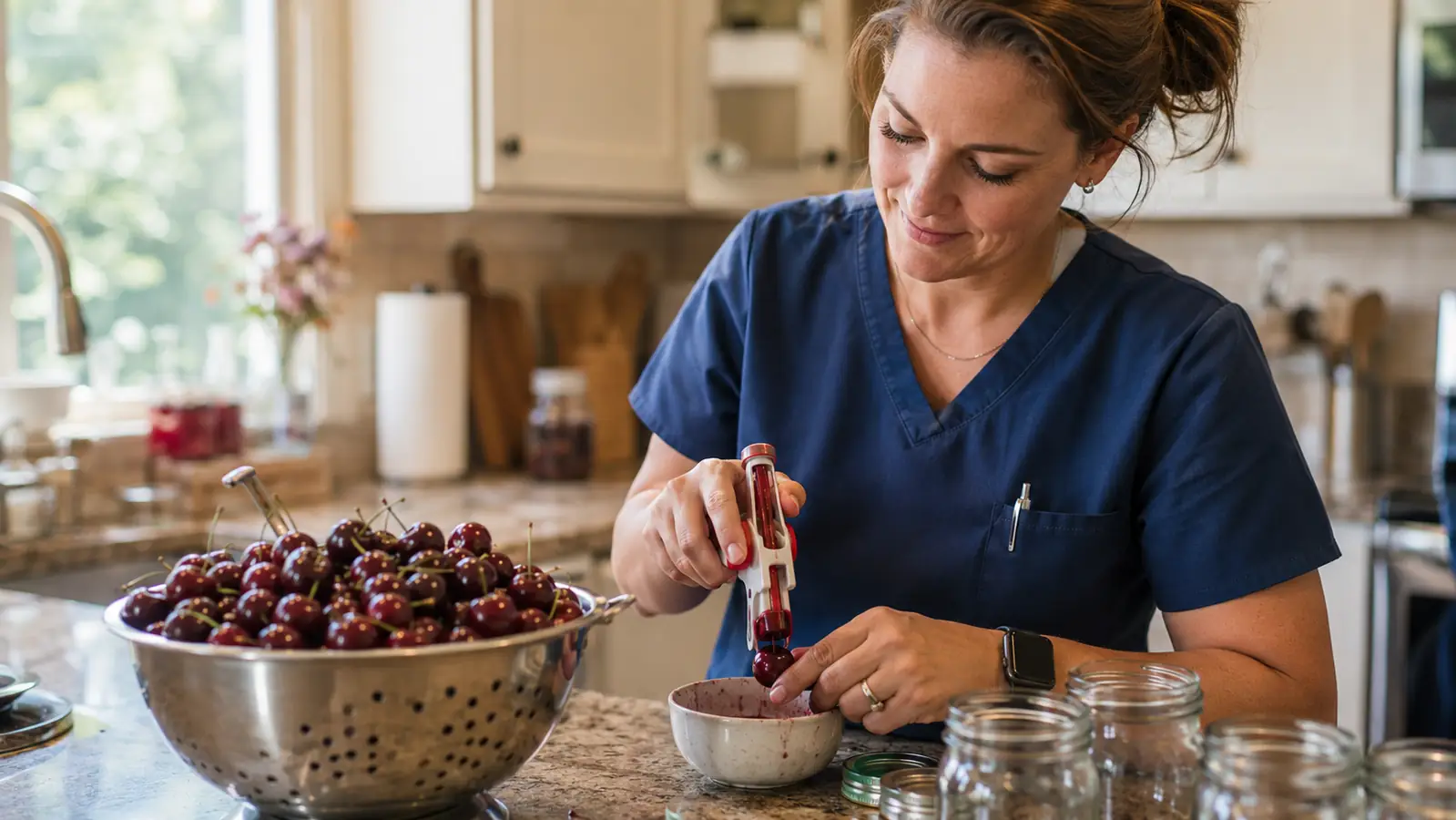
I bought the EddHomes cherry pitter in the first week of June, right when my neighbor's cherry tree started dropping more fruit than her family could eat and she started leaving grocery sacks of them on my porch. I work twelve-hour nursing shifts three days a week and can on my days off, and cherries are the one fruit that used to make me dread canning season, because pitting them by hand with a paring knife takes forever and leaves my fingers stained red for two days straight. I ordered the EddHomes 7-in-1 pitter on a Tuesday night after my third bag of free cherries showed up, and by the following weekend I'd already run four pounds through it for a batch of jam.
This review covers a full canning season, from that first bag of neighbor cherries in early June through the last jar of brandied cherries I put up in late August. In that stretch I pitted somewhere north of forty pounds of cherries, plus a jar of Kalamata olives I ran through it out of curiosity, and a batch of small plums that turned out to be a mistake I'll get into later. This is what actually happened to a twelve-dollar plastic and stainless tool after a real season of use, not a first-week impression written the day the box arrived.
The Quick Verdict
After forty-plus pounds of cherries this season, it still pits clean and fast, and the only real wear is a little staining on the plunger that soap and time haven't fully lifted.
Amazon Check Today's Price →Stop losing an hour of your Saturday to a paring knife and a bowl of cherries.
If you can, bake, or just eat a lot of fresh cherries in season, this is the twelve-dollar tool that turns pitting from a chore into a five-minute job. Check today's price and reviews on Amazon.
Amazon Check Today's Price on Amazon →How I've Used It
My testing wasn't a lab experiment, it was just my actual canning season. I keep the EddHomes pitter in the drawer closest to my sink, next to my jar lifter and my funnel, because during cherry season that drawer gets opened almost daily. Over roughly ten weeks I ran it through Bing cherries from my neighbor's tree, a flat of Rainier cherries I bought at a farmers market for a lighter jam, a bag of frozen-then-thawed dark sweet cherries in July when the fresh ones dried up, and a smaller batch of sour pie cherries a coworker brought me from her family's orchard outside town.
I didn't treat it gently. It sat in a sink of cherry-juice water more times than I'd like to admit, went through the dishwasher's top rack at least fifteen times, and got tossed in a canvas bag along with my other prep tools when I hauled everything to my mother's house for a jam-making afternoon with my sister and her two kids underfoot. If a cheap plastic tool is going to crack, warp, or lose its spring tension, a season like that will show it fast.
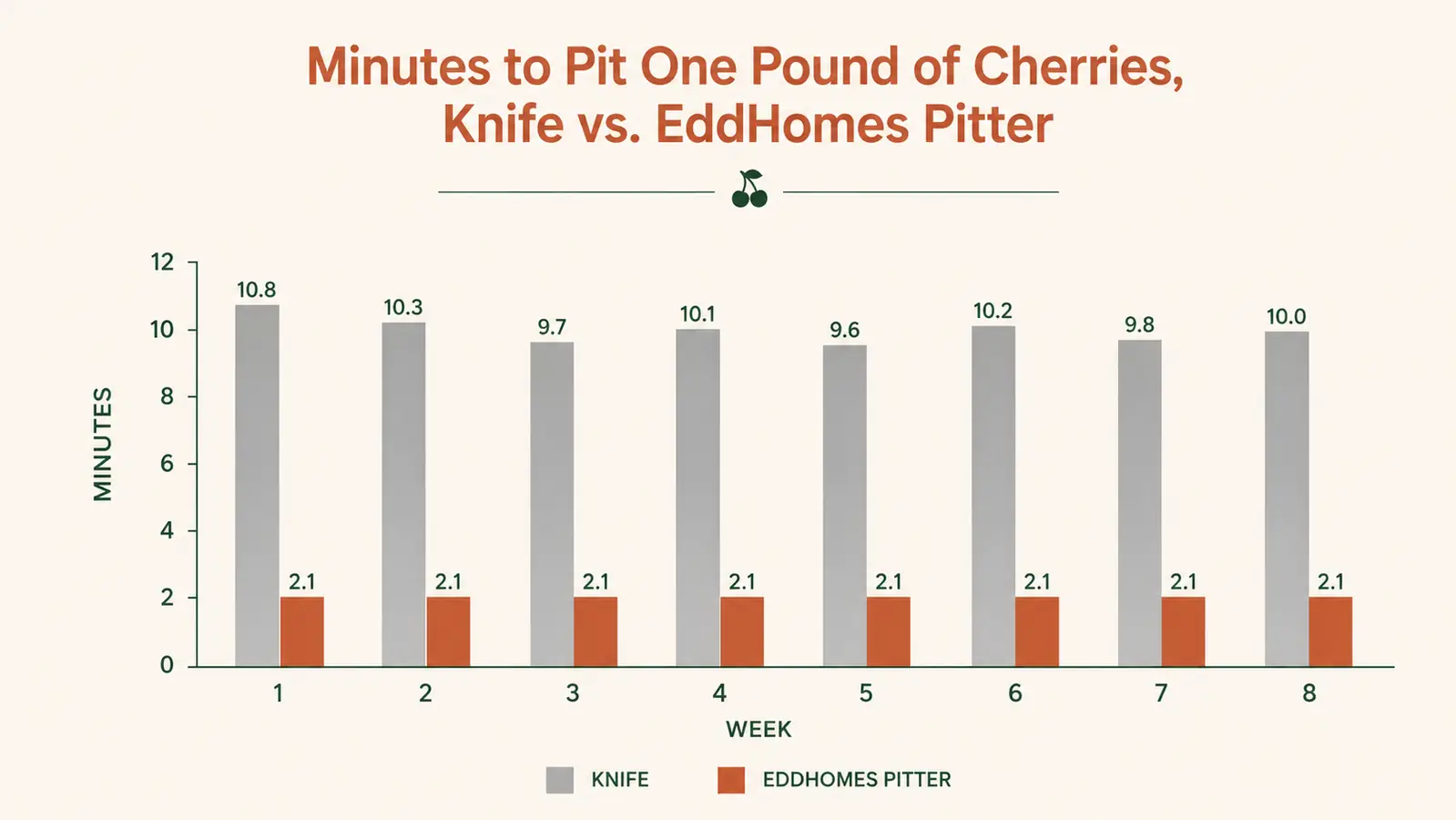
What I paid attention to was speed per pound compared to my old method with a paring knife and a chopstick to push the pit through, whether the pits actually stayed contained instead of flying across my kitchen the way one memorably did during my very first attempt, how much juice ended up on my counter versus in the bowl where it belonged, and whether the mechanism itself held up to that much repeated squeezing. I also tracked whether my hands got sore, since I'm already on my feet gripping IV pumps and charting tablets for twelve hours at a stretch, and the last thing I want on a day off is a kitchen tool that fights back against my wrists.
The Design: A Spring-Loaded Punch With Interchangeable Heads
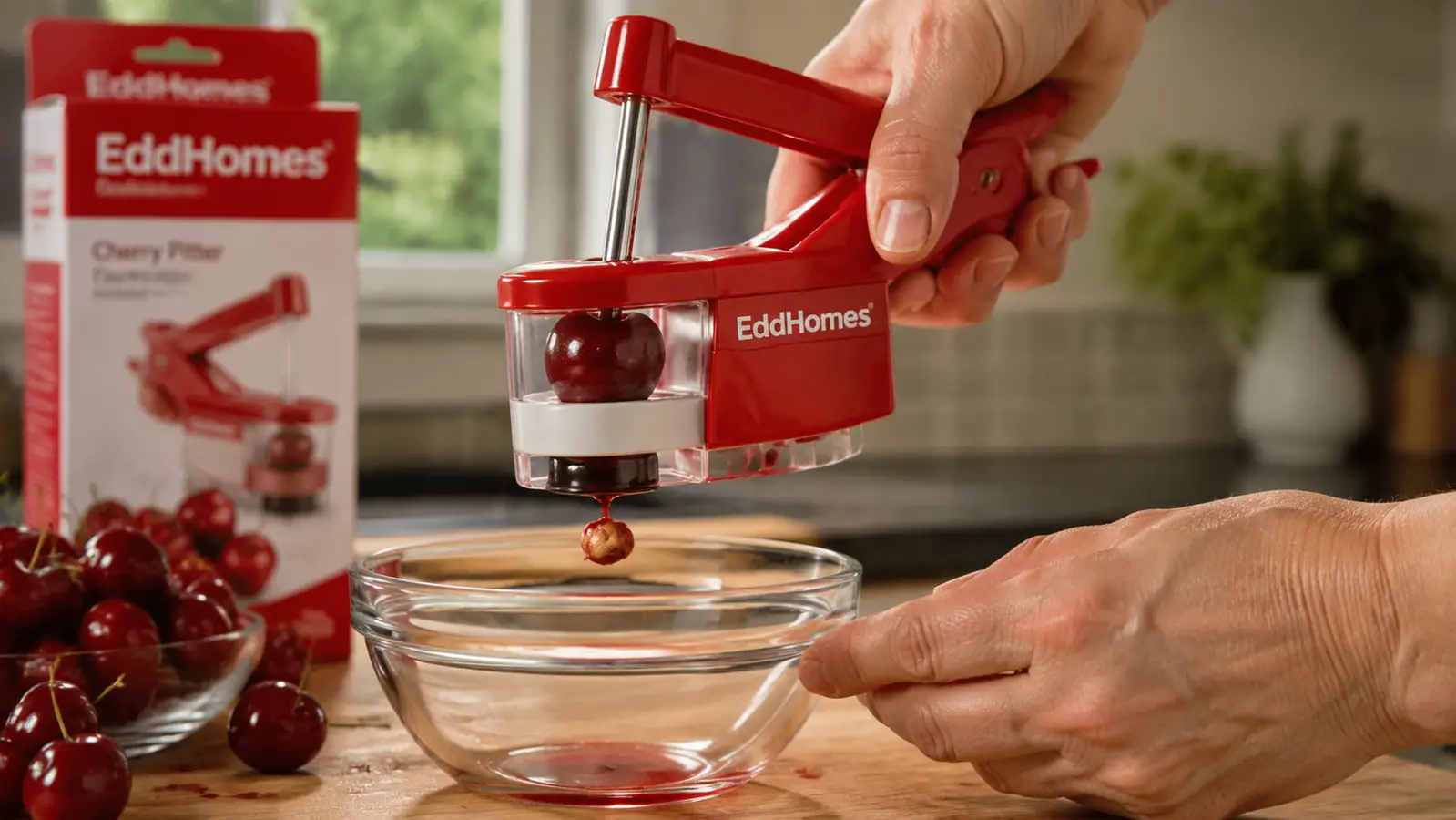
The EddHomes pitter works on a simple spring-loaded plunger design. You set a cherry stem-side up in the small cup at the bottom, squeeze the two handles together, and a stainless punch drives straight through the fruit and pushes the pit out the other side into a bowl or bag you've positioned underneath. The seven-in-one part comes from the interchangeable punch tip and cup insert, which let it handle everything from small olives up through larger plums, though I'll say up front that not every size swap worked as smoothly as the packaging suggested it would.
For a standard Bing or dark sweet cherry, the default setup is exactly right. The cup holds the cherry snug without crushing it, the spring has enough resistance that you feel the pit release rather than mushing through blind, and the plastic splash guard around the cup catches most of the juice that would otherwise end up on my shirt. I've pitted a full pound of Bings in under four minutes with it, stem and all, working with one hand while I rinsed the next batch with the other in the sink beside me.
The clear plastic body lets me see the pit travel through, which sounds minor but matters when you're doing this forty pounds at a time, because I could tell within a squeeze or two if a cherry was too small for the cup and needed repositioning rather than finding out after a mangled fruit. The stainless steel punch itself has stayed sharp all season, no dulling that I can feel or see, and no rust despite going through the dishwasher weekly for two straight months.
A Full Season In: What Held Up and What Didn't
The good news covers most of the tool. The spring mechanism still snaps back with the same tension it had on day one, no sag, no sticking, no grinding feeling when I squeeze. The stainless punch is exactly as sharp as it was in June. I haven't had a single crack in the clear plastic housing, even after that one memorable drop onto my tile floor when my dog startled me mid-squeeze in July and sent cherry juice across half the kitchen. The splash guard is still fully attached and doing its job.
What hasn't held up as well cosmetically is the plunger itself, which has taken on a faint pink-red stain from all that cherry juice that soap, a baking soda paste, and even a run through my dishwasher's sanitize cycle haven't fully removed. It's purely cosmetic, doesn't affect function, but if you're the type who wants your kitchen tools looking brand new after a season, know that cherry juice leaves its mark on the lighter plastic parts the same way it leaves a mark on your countertop and your fingertips every June.
The interchangeable heads are where I have my one real complaint. Swapping between the cherry cup and the smaller olive cup requires popping off a snap-fit piece that, by week six, had gotten noticeably looser than it was new. It still holds during use, but I can feel it wants to pop off if I'm not careful setting it back in place. It never has mid-squeeze, but I baby that connection now in a way I didn't have to in June when everything felt tight and new.
Beyond Cherries: Olives, Plums, and the One Fruit I'd Skip
Curiosity got the better of me one afternoon in July and I ran a jar of Kalamata olives through it using the smaller cup insert. It worked better than I expected, the pit punched clean through most of them, though a few of the softer, more mature olives collapsed under the pressure rather than releasing the pit cleanly. For a batch of tapenade where the olives are getting chopped anyway, that's a non-issue. If you wanted whole pitted olives for a cheese board, expect maybe a fifteen percent casualty rate on the softer ones.
The plum experiment was where I learned the tool's real limit. I tried small Italian prune plums using the larger cup insert, and while a handful pitted fine, most of the plums I tested were either too soft and squashed in the cup, or had pits that sat at an angle the punch couldn't line up with cleanly no matter how I positioned them. Larger, firmer plums or apricots might do better, but I'd call small, soft plums genuinely outside what this tool handles well, and I went back to a knife for the rest of that batch that afternoon.
Frozen cherries, thawed first, actually pitted beautifully, maybe even easier than fresh, since the flesh had softened slightly and the pit released with less resistance. That was a pleasant surprise in late July when the farmers market cherries dried up and I was working through a bag from my freezer for one more round of jam before the season really ended and the summer produce shifted over to peaches.
I also cleaned up after every session and paid attention to how long that took, since cleanup time is the part reviews never mention. The pitter breaks down into three pieces for washing, the body, the plunger, and the cup insert, and none of them have tiny crevices where cherry flesh gets stuck the way it does in some pitters I've owned before. A quick rinse under the tap gets most of it, and a run through the dishwasher's top rack handles the rest. That's a real point in its favor for anyone doing this by the pound instead of by the handful.
The Tradeoffs Nobody Mentions in the Five-Star Reviews
Every review I read before buying made this sound like it handles anything you throw at it, and after a full season I don't think that's entirely honest. It's genuinely built around cherries and small olives. Anything larger or softer than that is a mixed bag, and the plum experiment proved it to me directly. If your household mostly stones larger fruit like peaches or full-size plums, this specific tool isn't the right match, no matter what the seven-in-one label on the packaging implies to a first-time buyer.
It's also a one-cherry-at-a-time tool, which matters if you're processing serious volume. Four minutes a pound is fast compared to a knife, but when you're staring down twenty pounds for a big batch of jam like I did twice this summer, that's still an hour and change of steady squeezing. My hand got tired around the forty-minute mark both times, and I ended up trading off with my sister so neither of us cramped up before the fruit softened too much to can properly and safely.
Lastly, the juice containment is good but not perfect. On cherries that are extra ripe and juicy, some spray does escape past the splash guard, especially if you're moving fast to keep up with a full colander. I learned to wear an old t-shirt during big pitting sessions after ruining one work scrub top with cherry splatter in the second week of June, which was entirely my own fault for not thinking ahead before I started squeezing.
What I Liked
- Pits a full pound of cherries in under four minutes with the default cup
- Stainless punch has stayed sharp all season with no rust after weekly dishwasher cycles
- Clear housing lets you see the pit release and catch a misaligned cherry early
- Splash guard genuinely reduces mess compared to pitting by hand
- Works surprisingly well on thawed frozen cherries, not just fresh
Where It Falls Short
- Smaller interchangeable cup connector has loosened noticeably with repeated swapping
- Plastic plunger picks up a permanent pinkish cherry stain over a season
- Struggles with soft, small plums despite the seven-in-one packaging claim
- One cherry at a time means large-batch canning still takes real time
- Splash guard doesn't fully contain juice on the ripest, juiciest cherries
It's not the tool that does everything the box promises. It's the tool that turned forty pounds of cherries this summer from a dreaded chore into something I actually looked forward to on a Saturday morning.
Who This Is For
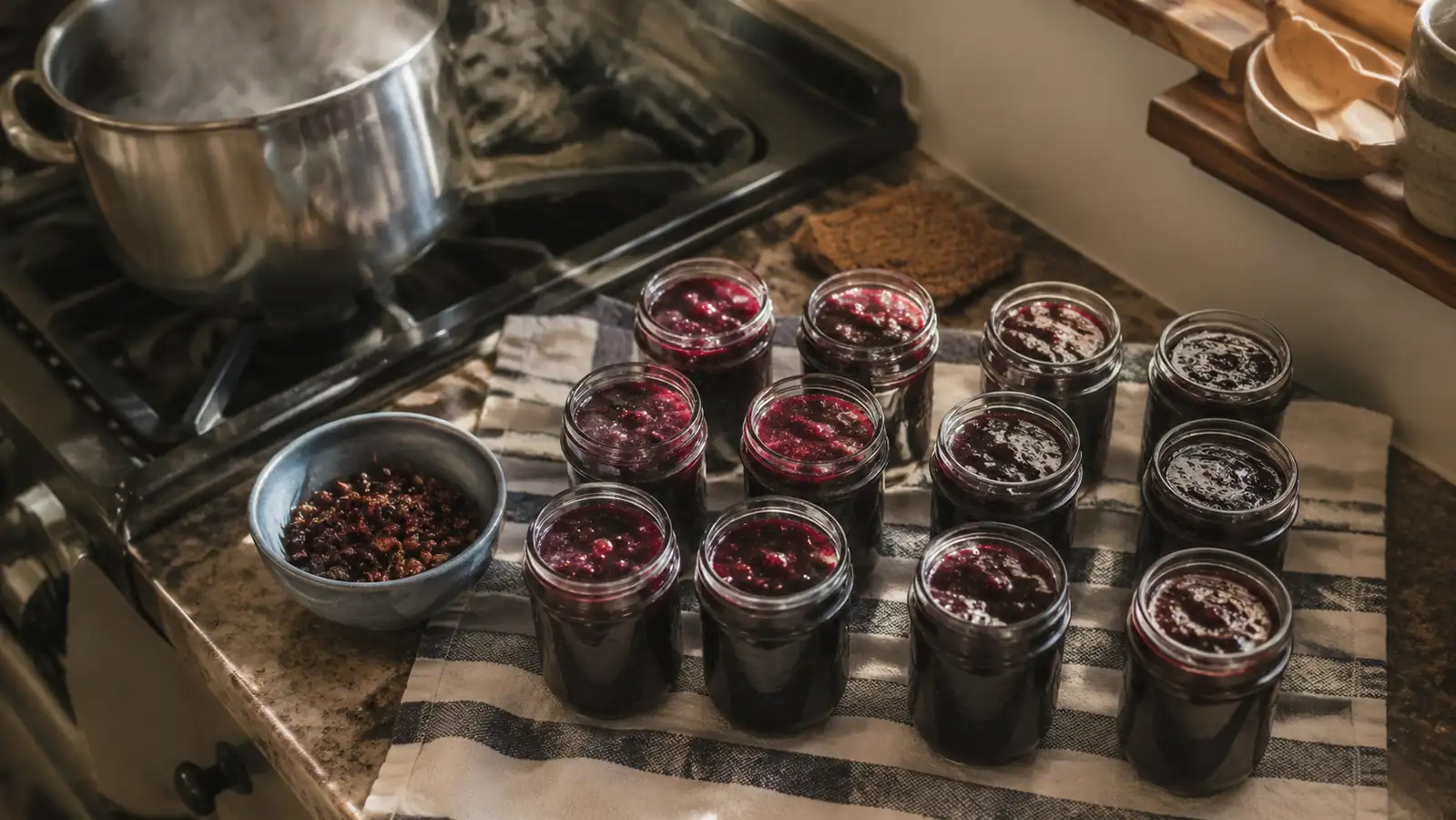
This is built for anyone who deals with real volumes of cherries during the season, whether that's from your own tree, a generous neighbor like mine, or regular farmers market hauls for jam, pie filling, or brandied cherries. If you can or preserve on your days off the way I do, or you just eat enough fresh cherries in June and July that pitting by hand has started to feel like a second job on top of your first one, this tool earns its twelve dollars back within the first pound you run through it.
Who Should Skip It
If your fruit preserving mostly centers on peaches, apricots, or full-size plums, look elsewhere, because this pitter is genuinely a cherry-and-small-olive specialist despite the seven-in-one label on the box. And if you only deal with a small handful of cherries a few times a year, a paring knife and a little patience will get you through without adding another single-purpose gadget to a drawer that's probably already full.
A full canning season later, this is still the tool I reach for every June.
If cherries show up in your kitchen by the pound during the season, the EddHomes pitter pays for itself the first weekend you use it. See current pricing and stock on Amazon.
Amazon Check Today's Price on Amazon →